Rethinking the commemoration of Indian Residential Schoolsthrough digital heritage
Abstract
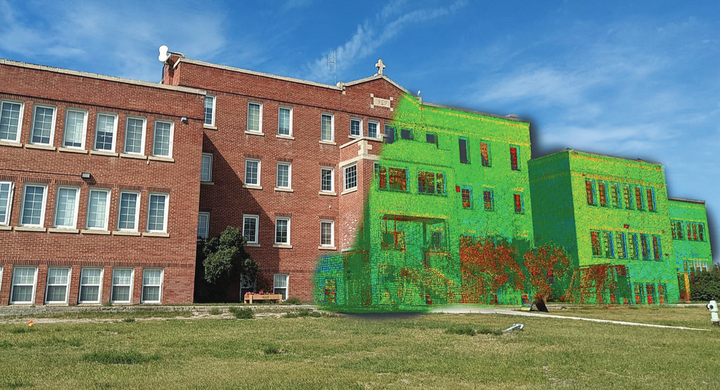
This paper examines the use of digital twins – highly accuratevirtual models of physical structures created through terrestrialLiDAR scanning – to support the commemoration of heritage siteswith difficult histories. In Canada, former Indian Residential School(IRS) buildings are increasingly at risk of loss due to their associationwith 160 years of government policies aimed at the forced assimila-tion and colonisation of Indigenous peoples. Despite this legacy,many Indigenous communities regard these structures as ‘wit-nesses to history’ and ‘sites of conscience’, and advocate for theirpreservation and recognition. We present case studies involvingdigital twins of three former IRS buildings, demonstrating howthis technology can aid in safeguarding their physical and narrativepresence. Digital twins serve not only as conservation tools but alsoas platforms through which Survivors can share their memories,fostering broader public understanding. This methodology offersa transferable model for commemorating similarly threatened sitesworldwide that are tied to histories of Indigenous oppression andcultural erasure.